For beginners launching a basic blog or a static portfolio, standard shared web hosting is often the default choice due to its low cost and simple setup. However, as projects grow into complex web applications, databases, or dynamic environments, developers almost universally migrate away from shared platforms in favor of a Virtual Private Server (VPS).
The preference isn't just about getting more raw power; it is about the fundamental architectural freedom that a virtualized environment provides. Shared hosting structures are built with rigid restrictions that safely accommodate hundreds of non-technical users on a single machine. For a developer who needs to compile custom code, manage dependencies, or optimize server responses, those restrictions quickly turn into brick walls.
Whether building custom API backends, deploying modern JavaScript frameworks, or configuring a highly responsive gaming container on an advanced platform like CloudLaag, developers choose VPS infrastructure for several distinct technical reasons.
The most significant limitation of shared hosting is the lack of administrative control. On a shared server, you are confined to a basic control panel (like cPanel) with pre-configured software stacks managed entirely by the hosting provider.
A premium VPS provides complete root access (via SSH), giving developers full administrative rights over the entire virtual operating system. This structural freedom allows you to:

In a shared hosting environment, hundreds of websites draw power from the same pool of RAM, CPU cores, and disk I/O channels. If a neighboring website experiences a sudden traffic surge or executes a poorly written loop script, it can choke the physical hardware, causing your application to slow to a crawl or drop connections entirely.
Using advanced hardware virtualization (such as KVM), a VPS creates a completely isolated digital container. When you deploy an instance through CloudLaag, your allocated vCPU cores, system memory, and high-speed NVMe storage are 100% reserved for your account. No other user on the physical node can touch or steal your processing cycles, ensuring consistent, predictable performance round-the-clock.
Shared hosting environments inherently carry a higher risk of cross-contamination. Because hundreds of accounts share the same file system structure and local IP address, a security breach or spam penalty on a neighbor's site can negatively impact your reputation and delivery metrics.
An isolated virtual server allows developers to build custom security perimeters from scratch. You can configure dedicated iptables, deploy specialized intrusion detection systems (IDS), and manage strict user access control lists (ACLs).
Furthermore, every virtual container receives a unique, dedicated IP address. This isolation is critical for setting up clean SSL certificates, managing secure API integrations, and ensuring that transactional emails reach their destination without being flagged by external spam blacklists.
Predicting traffic patterns during an app launch or a community deployment is notoriously difficult. On shared infrastructure, hitting your allocated resource cap results in instantaneous 503 server errors, forcing you into a slow, manual data migration process to a larger server.
Virtual server hosting is built to scale on demand. If your application gains sudden traction, you can upgrade your core specifications instantly through your dashboard—adding more RAM, expanding storage space, or allocating extra CPU cores with minimal friction and zero data migration hassle.
| Operational Capability | Shared Web Hosting | Isolated VPS Hosting | | Administrative Access | Restricted to non-root control panels | Full Root Access (SSH command line) | | Software Compatibility | Fixed PHP/MySQL versions only | Any custom language runtime, framework, or database | | Hardware Performance | Shared dynamically; prone to neighborhood lag | 100% Dedicated hardware allocation | | IP Allocation | Shared across hundreds of external domains | Unique Dedicated IP address per instance | | Storage Architecture | Standard shared drive space | High-speed isolated NVMe arrays |
For developers targeting audiences across India, deploying environments on local, highly optimized pipelines is essential to keeping latencies low and workflows fluid.
Choosing to launch your projects on the CloudLaag network gives you the raw performance of enterprise hardware combined with complete environment isolation. Whether you are running complex backend scripts, high-traffic web apps, or low-latency game instances like an optimized Minecraft cluster, your virtual nodes remain highly secure.
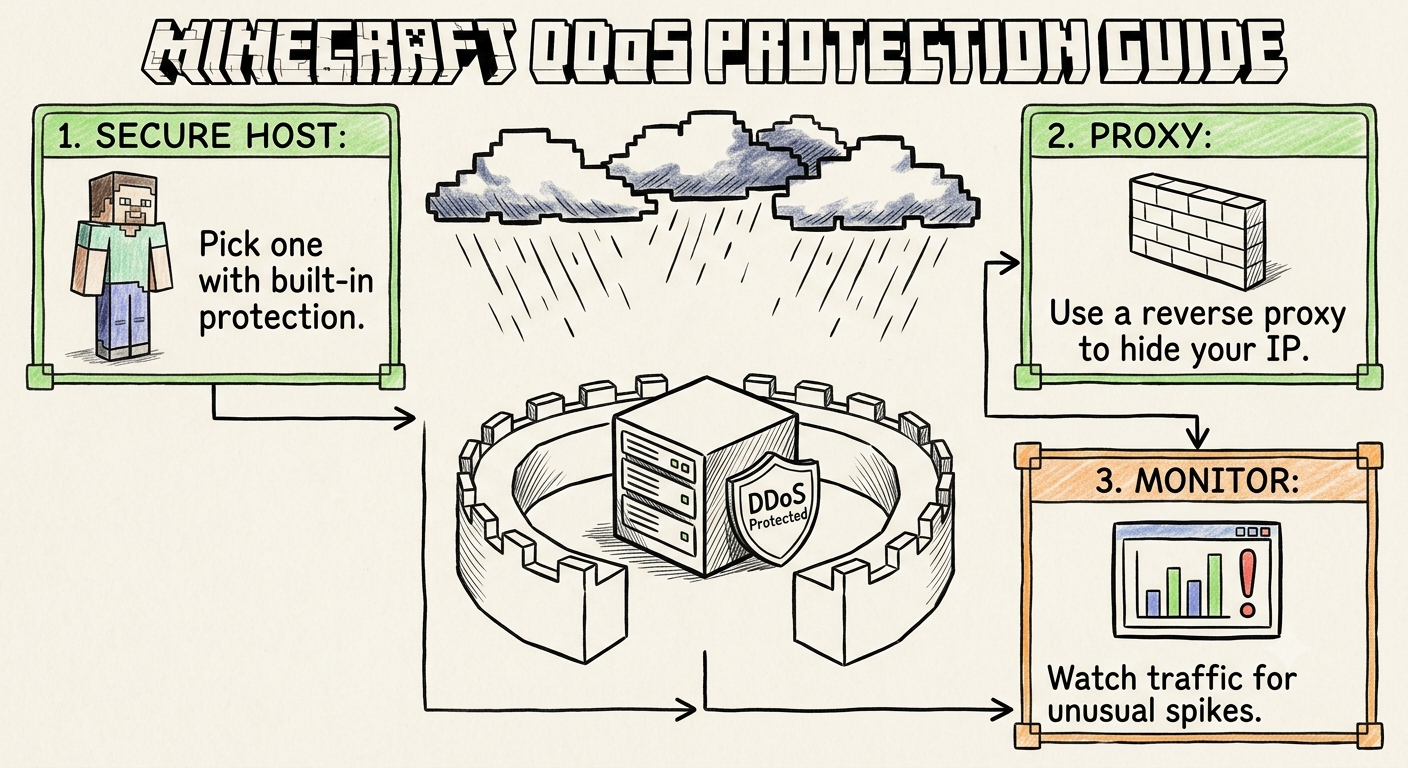
Every instance deployed under the platform benefits from Always-On DDoS Protection managed at the edge network level. While a standard shared host would instantly drop your server to mitigate an ongoing volumetric attack, CloudLaag's protocol-aware edge scrubbers filter out malicious traffic smoothly before it ever reaches your virtual container, keeping your CPU lines open for valid requests and maintaining flawless uptime.
Developers prefer a VPS over shared hosting because it replaces structural restrictions with complete environment sovereignty. The combination of full root control, dedicated resource pools, customizable security, and elastic scaling allows development teams to build, test, and deploy software exactly the way it was designed to run. By leveraging high-performance local infrastructure networks like CloudLaag, creators gain the enterprise-level control and sub-40ms routing across India needed to scale modern applications seamlessly.

Thursday, July 16, 2026

Thursday, July 16, 2026

Wednesday, July 15, 2026

Monday, July 13, 2026

Wednesday, July 15, 2026