Building automated assistants, moderation systems, music players, or interactive games for communities has evolved from a simple hobby into a core pillar of digital community management. Behind every responsive bot replying to slash commands or managing server roles is a backend engine handling API requests and Gateway WebSockets.
While developers can build bots using languages like Python, Go, C#, or Java, Node.js remains the dominant choice across the global developer community.
Whether you are writing your first automated moderation script or scaling a public bot across thousands of active servers on an enterprise platform like CloudLaag, understanding why Node.js dominates Discord bot development will help you choose the right stack for your software projects.
The platform relies heavily on continuous, real-time communication via WebSocket connections (the Gateway API). Every time a user sends a message, reacts with an emoji, joins a voice channel, or clicks an interactive button, an event is broadcasted to connected bots.
Node.js operates on an asynchronous, event-driven architecture built on Google's V8 JavaScript engine. Instead of creating a heavy operating system thread for every incoming trigger, Node.js uses a single-threaded event loop paired with non-blocking input/output operations.
When your bot receives hundreds of interaction events per second, Node.js handles I/O operations asynchronously without choking the primary process. This architecture makes it exceptionally fast at receiving events, making HTTP API calls, and returning instant responses to users.
Language adoption is heavily driven by available libraries, and Node.js boasts one of the most mature, feature-complete, and well-maintained frameworks: discord.js.
JavaScript is currently the most widely known programming language in web development. Because Node.js utilizes standard JavaScript, developers can transition from front-end web design to backend bot development without learning a completely new syntax.
The Node Package Manager (NPM) gives bot creators access to millions of open-source packages. With simple terminal commands, developers can integrate:
| Developer Metric | Node.js (discord.js) | Python (discord.py) | Go (discordgo) |
|---|---|---|---|
| Execution Model | Non-blocking Event Loop | Asyncio Event Loop | Compiled Goroutines |
| I/O Latency Handling | Exceptional for real-time WebSockets | Good, but slightly slower execution | Ultra-fast compiled processing |
| Learning Curve | Low to Moderate (JavaScript) | Very Low (Readable Python syntax) | Moderate (Strongly typed language) |
| Community Support | Massive ecosystem & extensive tutorials | Very large community base | Smaller, developer-focused community |
| Memory Footprint | Moderate (V8 Engine overhead) | Low to Moderate | Very Low (Compiled binary) |
As a bot scales past 2,500 active servers, the platform forces the application to implement Sharding. Sharding splits your bot into separate processing connections to distribute WebSocket traffic evenly.
Node.js handles sharding effortlessly through built-in modules like ShardingManager. This allows developers to spawn worker threads or isolated child processes across multi-core server processors, keeping individual shards responsive even if a single server cluster experiences heavy user activity.
Running a production bot from a personal laptop or temporary free cloud slot leads to constant disconnections, missing gateway events, and database corruption. To maintain true 24/7 uptime, serious developers deploy their applications on isolated cloud instances.
Deploying your Node.js bot on dedicated Discord hosting or an isolated VPS environment through CloudLaag delivers full root access, unthrottled CPU threads, and guaranteed resource isolation. Whether your application manages moderation logs, external API webhooks, or bridges player data to a gaming setup like a Minecraft network, an isolated virtual container ensures your process runs continuously without background throttling.
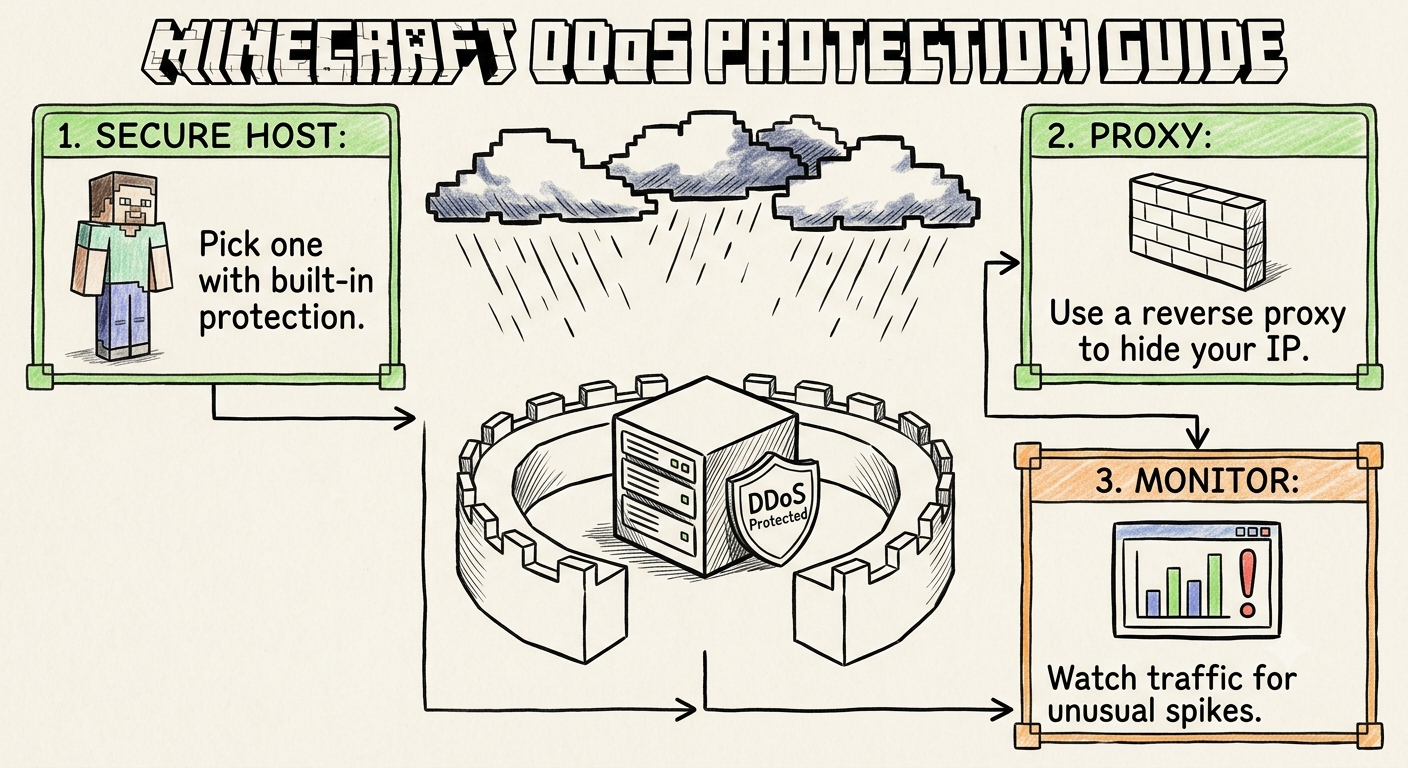
Every environment hosted on the platform benefits from enterprise NVMe SSD storage arrays as a standard baseline, letting your database operations read and write instantly. Furthermore, your bot remains shielded by automated . Protocol-aware edge scrubbers absorb malicious network floods before they reach your virtual machine, keeping your sub-40ms routing across India stable and your WebSocket connection permanently online.
- Use Process Managers: Always manage your Node.js application using a process manager like PM2 or Docker containers. This ensures your bot automatically restarts if an unhandled API error occurs.
- Review System Setup Tutorials: Keep your system administration skills sharp. Developers can study verified Linux environment setups and server security profiles by reading through official tutorials inside CloudLaag technical docs and developer wikis.
- Follow Infrastructure Evolution: Development stacks, Node.js LTS releases, and cloud hosting architectures evolve rapidly. Stay informed on the latest deployment strategies and performance optimizations by checking out technical write-ups on the CloudLaag network blog page.
Node.js remains the top choice for developers because its non-blocking asynchronous architecture aligns perfectly with the event-driven Gateway API. Combined with the feature-complete discord.js library, access to the massive NPM package repository, and effortless sharding support, Node.js empowers developers to build everything from simple moderation scripts to massive multi-server applications.
Hosting your Node.js application within an isolated, high-speed VPS pipeline managed by CloudLaag delivers the perfect combination of unthrottled hardware execution, low-latency network paths, and robust edge protection needed to keep your bot responsive 24/7.
Recommended for this article
Monday, July 13, 2026