When evaluating infrastructure performance for web applications, enterprise databases, or real-time gaming setups, memory capacity (RAM) and processor clock speeds (vCPU) usually get all the attention. However, even the fastest multi-core processors can be forced into idle execution loops if the underlying storage layer cannot read and write data fast enough.
For years, solid-state drives (SSDs) operating over legacy SATA cables were considered the standard for fast hosting. But as application architectures shifted toward real-time database queries, microservices, and heavy concurrent user connections, legacy drive interfaces hit a hard physical bottleneck.
Enter NVMe (Non-Volatile Memory Express) storage. By connecting storage directly to the mainboard, NVMe technology has revolutionized server performance across the hosting industry.
Whether you are hosting complex API backends, running dynamic e-commerce stores, or deploying low-latency game instances on a high-performance network like CloudLaag, understanding why NVMe storage is a game changer for servers is vital to getting the most out of your infrastructure.
To understand why NVMe is such a massive leap forward, it helps to look at how older storage technologies communicate with your server's central processing unit (CPU).
Traditional SSDs rely on the SATA (Serial ATA) interface paired with the AHCI protocol. SATA was originally engineered decades ago for mechanical, spinning hard drives (HDDs). Because mechanical drives could only move one physical needle at a time, the AHCI protocol was designed to handle just a single command queue capable of holding up to 32 commands at once.
When high-speed flash media was plugged into SATA cables, the interface became a severe bottleneck. The solid-state chips were capable of moving data much faster, but the single SATA cable and restricted command queue choked performance.
NVMe was built from the ground up specifically for non-volatile flash memory. Instead of running through restrictive SATA cables, NVMe drives plug directly into the mainboard's PCIe (Peripheral Component Interconnect Express) lanes.
Architecturally, NVMe supports up to 64,000 parallel command queues, with each individual queue capable of executing 64,000 commands concurrently. This allows the server CPU to send tens of thousands of simultaneous read/write instructions directly to the storage drive without waiting in line.
| Architectural Metric | Legacy SATA SSD | Enterprise NVMe SSD |
|---|---|---|
| Interface Port | SATA Cable Architecture | Direct PCIe Bus Lanes |
| Command Queues | 1 Single Queue (32 commands max) | 64,000 Queues (64,000 commands each) |
| Data Throughput | Maxes out around 500–550 MB/s | Ranges from 3,500 to 7,000+ MB/s |
| Random IOPS (Input/Output) | ~50,000 to 90,000 IOPS | Up to 500,000 to 1,000,000+ IOPS |
| Access Latency | ~30 to 100 microseconds | Ultra-Low (<10 microseconds) |
Raw synthetic benchmarks look impressive on spec sheets, but how does this underlying storage evolution translate into real-world server performance?
Modern web applications rely heavily on relational or document databases (MySQL, PostgreSQL, MongoDB, Redis). Every time a user searches a product, submits a form, or logs into a dashboard, the server executes disk I/O operations.
On SATA drives, heavy concurrent user traffic creates disk queues, causing database queries to lag. Because NVMe handles hundreds of thousands of Input/Output Operations Per Second (IOPS), database queries execute almost instantaneously, drastically reducing backend response times.
In dynamic open-world multiplayer environments, players are constantly exploring, building, and generating new terrain blocks. When hosting a heavily modified Minecraft network, a Palworld world, or a custom game server, the engine continuously reads world chunks from the storage drive.
If the storage drive drops speed during peak exploration, the server drops its Ticks Per Second (TPS), leading to rubber-banding and block-lag. NVMe storage reads chunk sectors instantly, ensuring the main CPU thread spends its power processing game logic instead of waiting on disk I/O.
For developers running containerized environments (Docker, Kubernetes) or active continuous integration (CI/CD) pipelines, file system operations happen constantly. Pulling application images, compiling dependencies, and launching disposable testing instances happen in seconds rather than minutes, keeping engineering teams agile and deployment workflows fluid.
A common trend in budget hosting is "storage tiering"—where providers use cheap SATA drives for standard packages and hide fast NVMe storage behind expensive enterprise upgrades.
When you deploy virtual machines, game nodes, or cloud infrastructure through CloudLaag, high-speed enterprise NVMe SSD storage is included as a baseline standard across all tiers.
Pairing top-tier NVMe arrays with high-frequency processors (like AMD Ryzen 9 5900X and AMD EPYC chips) on an isolated VPS guarantees that your applications operate without hidden hardware bottlenecks.
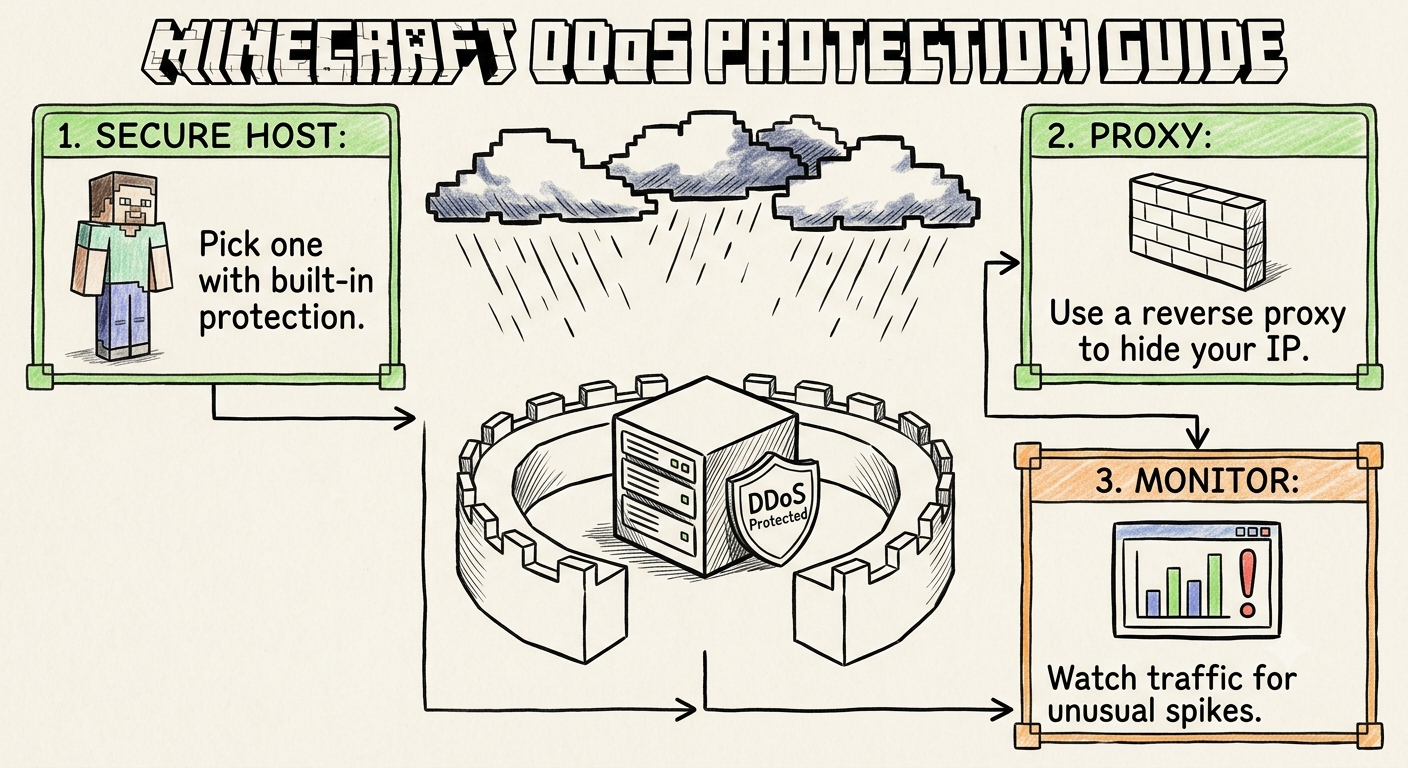
Furthermore, your environments remain entirely protected. While your storage drives execute high-density read/write operations, CloudLaag's automated, Always-On DDoS Protection dynamically scrubs out malicious external traffic at the edge network layer. This keeps your processing lines open, maintaining sub-40ms routing across major connectivity hubs.
- Match OS Configurations to High-Speed Drives: Ensure your virtual operating systems run modern Linux kernels (like Ubuntu 22.04/24.04 LTS or Debian 12) that native-support advanced PCIe NVMe queueing algorithms.
- Review Official Infrastructure Documentation: Keep your system administration team technically sharp. System managers can explore verified environment setups and storage optimizations by studying guides inside official CloudLaag technical docs and developer wikis.
- Monitor System Storage Logs: Track disk usage, inode limits, and data growth trends regularly by exploring technical write-ups and server deployment insights on the CloudLaag network blog section.
Storage architecture forms the physical foundation of your entire hosting stack. Sticking with legacy SATA drives chokes modern multi-core processors, turning high-capacity servers into slow, lagging environments under load.
Upgrading to enterprise NVMe SSD hosting removes disk I/O bottlenecks, delivers ultra-low system latency, and unlocks the true processing capability of your hardware. Deploying your workloads on an isolated, NVMe-driven platform managed by CloudLaag ensures your databases query instantly, your game networks stay fluid, and your cloud infrastructure delivers lightning-fast performance.

Wednesday, July 1, 2026