Launching a new multiplayer world immediately brings you face to face with a fundamental financial choice: Should you use a free hosting service, or invest in a premium paid provider?
At first glance, free hosting looks incredibly attractive. The idea of running a community network without spending a single rupee is tempting for student developers, casual gamers, and small groups of friends alike. However, in the enterprise multiplayer landscape of 2026, "free" always comes with hidden catches that can completely ruin your gameplay experience.
Whether you are deploying a basic vanilla setup or running isolated networks on a localized framework like CloudLaag, understanding the structural differences between free and paid infrastructure is vital. Let us break down the technical realities of Free vs Paid hosting.
Free hosting providers are businesses, meaning they must pay for their underlying data centers, electricity, and network bandwidth somehow. Since they are not charging you directly, they enforce extreme limitations and alternative monetization methods:
Free hosts place thousands of individual game slots onto weak, outdated processors. To prevent their hardware from bursting, they heavily throttle your single threaded CPU execution and limit your RAM capacity (usually capping it at an unstable 1GB or 2GB). Furthermore, during peak gaming hours, you will often have to sit in a virtual queue for 30 to 60 minutes just to turn your own server on.
Almost every free hosting server will automatically shut down if it detects that no players are online for more than 5 to 10 minutes. This means your world is never truly 24/7. Players cannot join whenever they want; an administrator must manually log into a web dashboard, sit in a queue, and boot the server up every single time.
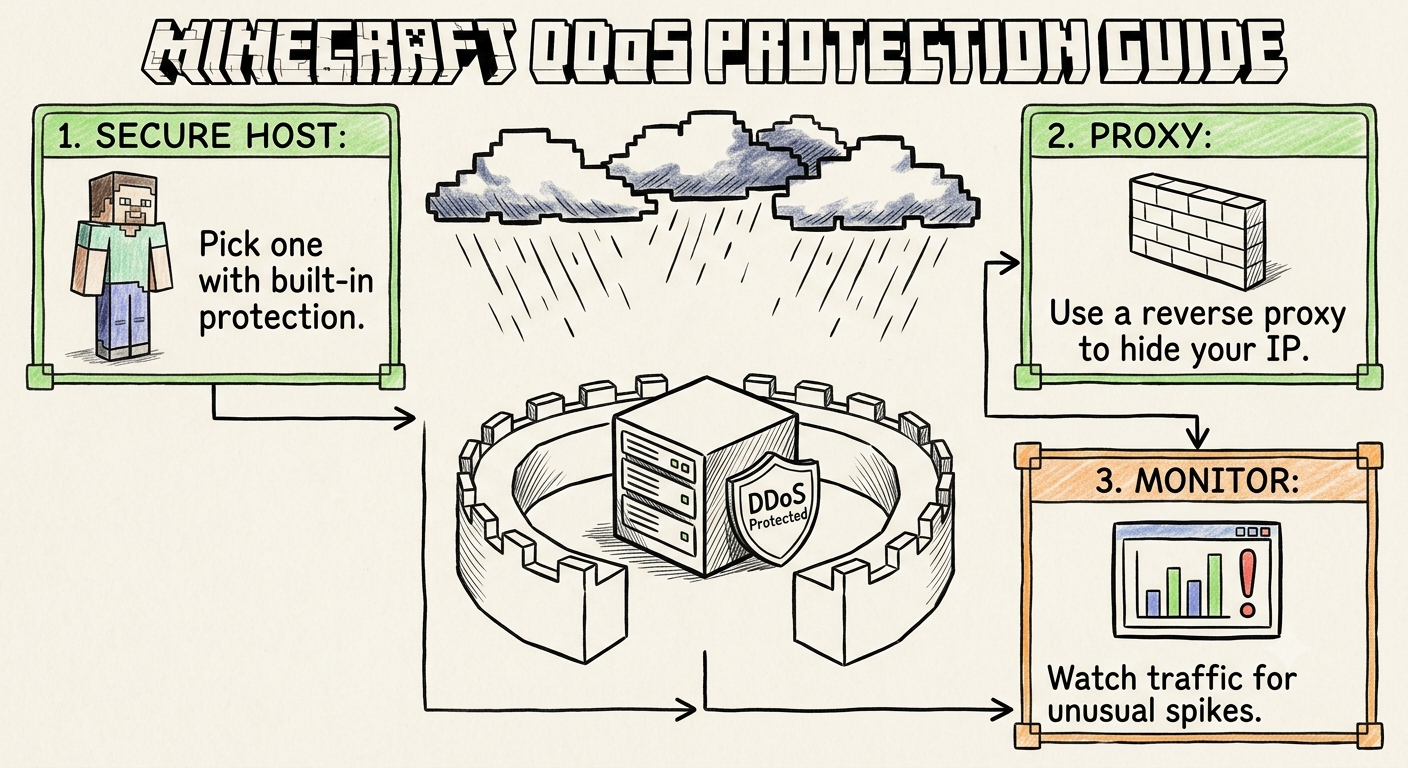
Free dashboards are typically cluttered with aggressive, unskippable video ads. More importantly, free platforms lack advanced firewalls. If your community faces a basic bot flood or malicious exploit, free hosts will instantly drop or permanently suspend your server to protect their parent network from crashing.
Paid hosting, especially when deployed on an isolated virtual node or a dedicated VPS container, removes all corporate limitations, putting you in complete control of your environment.
| Operational Metric | Free Hosting Services | Premium Paid Hosting (e.g., CloudLaag) | | Server Availability | Offline when empty (Inactivity timeouts) | Guaranteed 24/7 Uptime | | Server Booting | Forced virtual queues during peak hours | Instantaneous one click launch | | Resource Allocation | Heavily throttled, shared CPU pools | 100% Dedicated & Isolated hardware | | DDoS Protection | Minimal or non existent (Instant crashes) | Advanced Protocol Aware Edge Filtering | | Root Access / Control | Highly restricted custom web panels | Full SFTP & Root SSH Command Access | | Advertisements | Cluttered dashboards, forced ad watching | Completely white labeled and clean |
If your goals extend beyond playing a simple survival map with two friends for a couple of days, free hosting is structurally incapable of handling your needs.
Running economy networks, survival factions, or heavy cross play proxy bridges requires robust execution. Deploying your project on a professional Minecraft or general purpose cloud VPS ensures that your Ticks Per Second (TPS) stays at a perfect 20.0, keeping your block breaking fluid and your PvP mechanics lag free.
Furthermore, choosing local, premium infrastructure networks like CloudLaag balances your budget perfectly with enterprise performance. While international hosts might charge premium prices that stretch Indian budgets, local nodes provide sub 40ms latency routing across India alongside automated, Always On DDoS Protection included by default. Their protocol aware edge scrubbers actively analyze and absorb massive volumetric network attacks before they ever reach your game container, keeping your community online while free alternatives would simply vanish.
Recommended for this article