When launching a multiplayer instance, selecting the core server jar is the absolute foundation of your network's success. Your choice of server engine directly dictates your server's hardware optimization, plugin compatibility, modding capabilities, and overall gameplay stability.
Choosing the wrong software framework can cause devastating tick loops, extreme memory leaks, and unplayable chunk loading lag. Conversely, selecting the perfect engine ensures your world runs at a pristine 20.0 TPS (Ticks Per Second) even under heavy player loads.
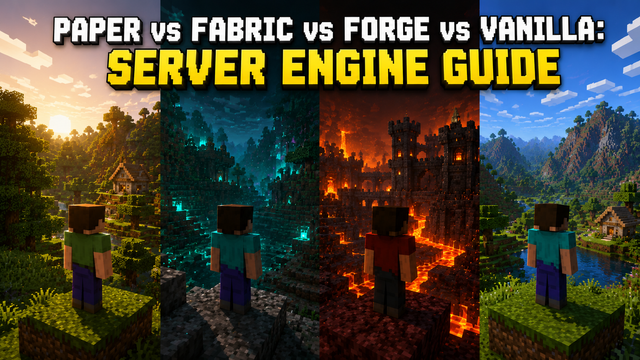
Whether you are configuring a small private co-op or managing scalable game containers on a dedicated network like CloudLaag, understanding the architectural differences between Paper, Fabric, Forge, and Vanilla is crucial. Let’s break down how these server engines compare in 2026.
Vanilla is the official, untouched server software provided directly by Mojang. It represents the game exactly as the developers intended, without external optimizations or modifications.
Paper is a highly optimized fork of Spigot and CraftBukkit. It is designed from the ground up to fix engine flaws, patch game exploits, and significantly boost performance metrics.
Fabric is a lightweight, modular modding toolchain. Unlike traditional modding setups, Fabric is highly flexible and acts as an exceptional optimization platform when paired with server-side performance mods.
Forge is the long-standing powerhouse of the modding community. It provides a massive, deep development framework that allows modders to alter nearly every aspect of the core game engine.
| Operational Metric | Vanilla Server Jar | Paper Engine Fork | Fabric Modded Slate | Forge Modded Giant | | Performance/TPS | Low (Heavy Lag) | Exceptional (Ultra-Optimized) | Very High (With Mods) | Moderate (Resource Heavy) | | Plugin Support | None | Full (Bukkit/Spigot/Paper) | Minimal (Via Mods) | Minimal (Via Mod Adaptations) | | Mod Support | None | None | High (Lightweight Mods) | Full (Complex Modpacks) | | Vanilla Mechanics | 100% Intact | Altered for Safety | 100% Intact | Altered by Mods | | Hardware Overhead | Moderate | Ultra-Low | Low | High (Requires High RAM/CPU) |
Matching the right server engine with your expected player count is only half the battle; your underlying hardware must be able to keep up.
Running a complex Forge modpack or a heavy Paper community on standard shared web hosting will quickly lead to performance throttling. Upgrading your backend architecture to an isolated, high-performance VPS node guarantees that your chosen engine has dedicated access to modern NVMe SSD storage and unthrottled CPU cycles.
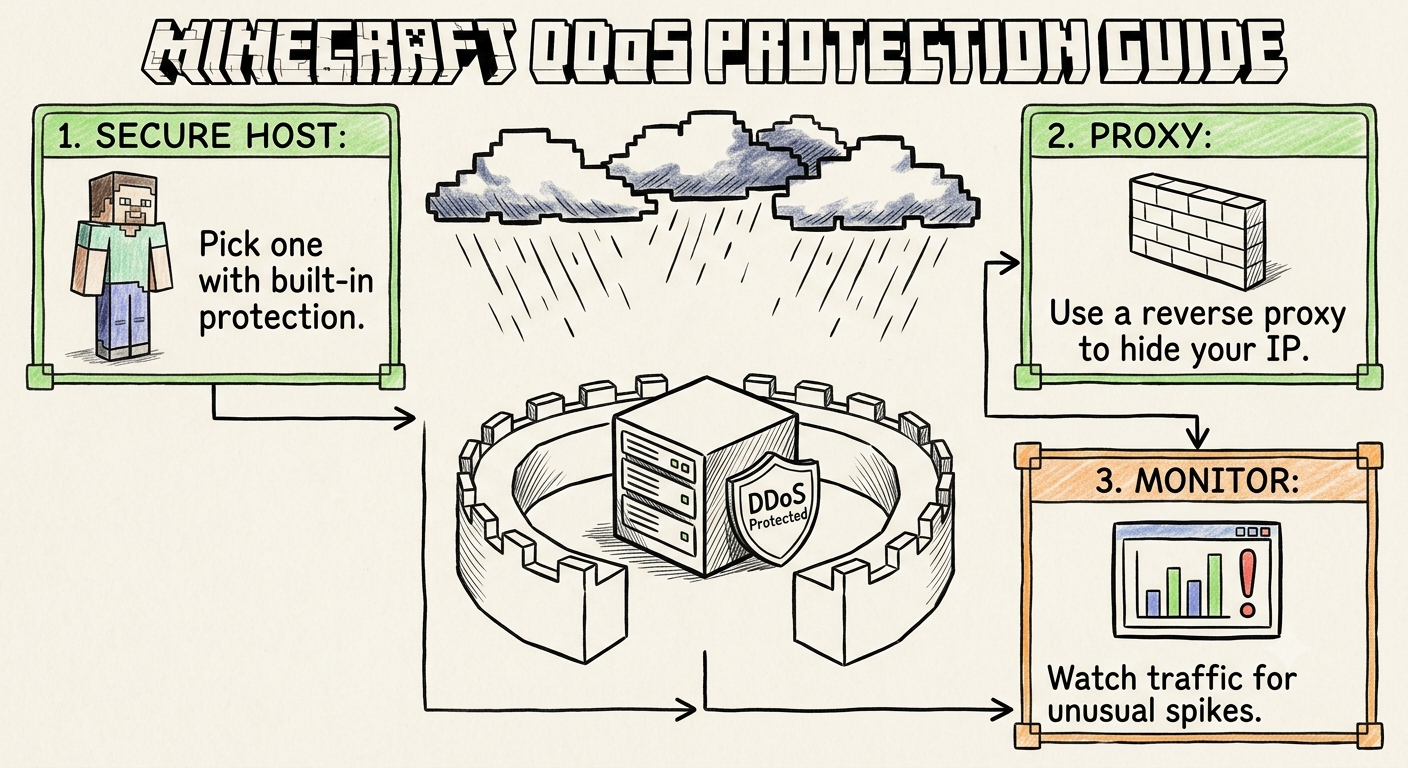
When you manage your community networks on enterprise infrastructure like CloudLaag, your chosen system runs within optimized server nodes backed by advanced, automated security filters. An attack from external malicious actors or botnets will be immediately intercepted by CloudLaag's protocol-aware edge scrubbers, ensuring that whether you run a lightweight Fabric node or a heavy Minecraft plugin cluster, your environment remains secure, stable, and completely online with low latency across India.
Want low latency for Indian players? Check out CloudLaag's High-Performance minecraft hosting.
Recommended for this article
Wednesday, July 1, 2026